Electrical engineer salary in California, city by city
Ask for a number in the upper half of the posted range, and if a posting somehow has none, ask for the range before naming a number of your own. An electrical engineer in California is in a comfortable spot to do this, because the employer has very likely written down what it expects to pay. The typical advertised salary in the state is $152,600.
The range is usually printed on the posting
Under California’s pay transparency law an employer with 15 or more employees has to put the pay scale in any job posting. The state Labor Commissioner reads that as covering any job that may ever be filled in California, in person or remotely. The pay scale is supposed to be a good faith estimate of the salary or hourly range the employer expects to pay at hire. So a California job posting is a slightly odd document. It is a company announcing in public the range of prices at which it is prepared to hire you, and then waiting to see whether you noticed.
That makes the postings worth adding up. Our analysis of about 53,200 engineering job postings that listed pay, collected by The Hiring List and first seen in the 60 days to November 9, 2026, includes about 800 electrical engineering postings in California. Each figure is the midpoint of an advertised annual base pay range, so bonuses and stock are not in it.
| Electrical engineering postings | Postings | 25th percentile | Median | 75th percentile |
|---|---|---|---|---|
| California, all levels | 807 | $130,000 | $152,600 | $183,700 |
| US, all levels | 8,285 | $105,000 | $126,400 | $152,000 |
| US, entry level | 595 | $80,000 | $87,500 | $111,500 |
| US, mid level | 4,008 | $100,000 | $115,000 | $135,000 |
| US, senior | 3,682 | $126,400 | $145,000 | $167,500 |
California’s typical advertised salary sits $26,200 above the national one. The more useful fact is lower down the distribution: the California 25th percentile, the point a quarter of postings fall below, is higher than the national median. A modest California offer is a pretty good offer by the standards of the rest of the country, which is worth remembering if a recruiter elsewhere tells you a number is generous.
The split by level is national, so it does not show California levels directly. If you are a new graduate, you would probably treat the national entry-level figures as a floor in California rather than a target, since the state as a whole advertises well above the country. If you are senior, the California 75th percentile is a number a posting can plausibly reach.
The same question, metro by metro
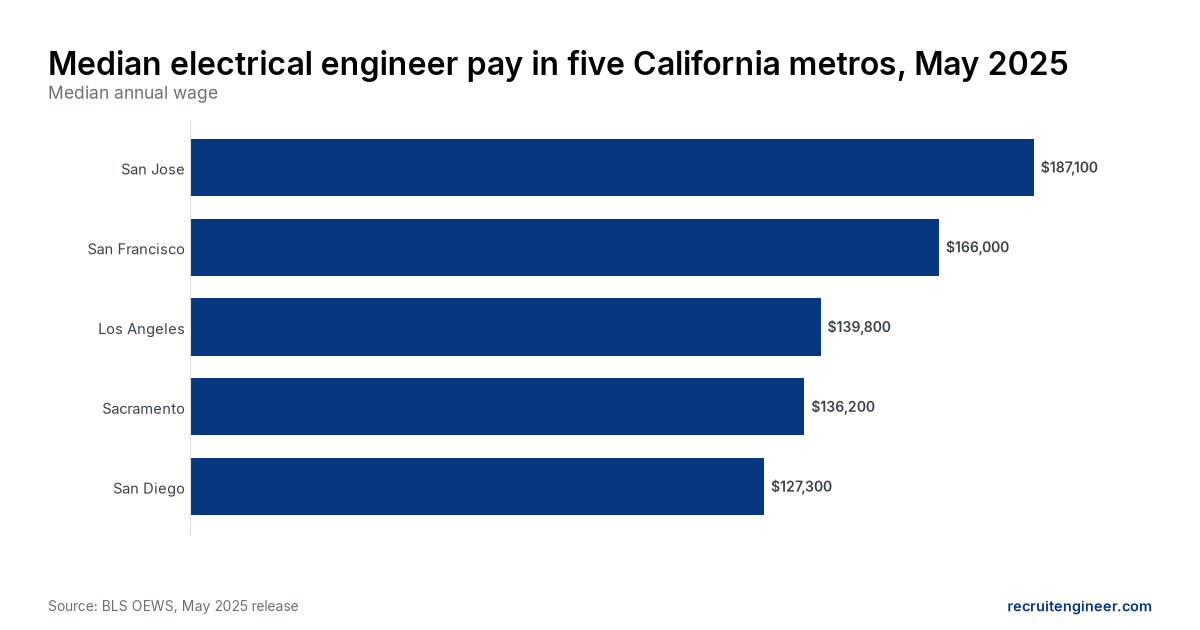
Postings tell you what employers say they will pay. Federal wage data for May 2025 tells you what electrical engineers in each metro were actually earning, which is a slightly different and older question. The price level in each metro comes from regional price data from the Bureau of Economic Analysis for 2024. Those regional price parities measure differences in price levels across states and metro areas as a percentage of the overall national price level.
| Metro (city page) | Electrical engineers employed | 25th percentile | Median | 75th percentile | Price level (US = 100) | Median at national prices | Advertised median, postings in the city |
|---|---|---|---|---|---|---|---|
| San Jose-Sunnyvale-Santa Clara | 4,160 | $157,200 | $187,100 | $218,200 | 110.4 | $169,500 | $169,300 |
| San Francisco-Oakland-Fremont | 2,470 | $124,700 | $166,000 | $204,500 | 115.6 | $143,600 | $187,500 |
| Sacramento-Roseville-Folsom | 1,420 | $104,300 | $136,200 | $171,600 | 106.7 | $127,600 | Too few postings to show |
| Los Angeles-Long Beach-Anaheim | 8,970 | $103,800 | $139,800 | $179,500 | 113.6 | $123,100 | $155,000 |
| San Diego-Chula Vista-Carlsbad | 2,400 | $93,700 | $127,300 | $162,300 | 111.9 | $113,800 | $142,500 |
San Jose wins twice
San Jose pays its electrical engineers the most of these five metros, and its prices are a little lower than those in San Francisco or Los Angeles, so it stays first once you count what things cost. After prices, the typical San Jose electrical engineer is ahead of the typical San Francisco one by $25,900. Oddly, postings in San Jose itself advertise a median below the federal median for the metro, the only one of these cities where that happens. So a San Jose posting’s midpoint is a weak anchor, and the federal figure is the better one to ask from.
Sacramento sneaks up
Sacramento looks unremarkable on raw pay and then turns out to have the lowest price level of the five. Count prices and it passes both Los Angeles and San Diego. If you are an electrical engineer who cares about what a salary buys more than how it sounds at a dinner party, the Sacramento market deserves more attention than its headline number gets.
Los Angeles is where the jobs are
Los Angeles employs about 9,000 electrical engineers, roughly twice San Jose’s count, so it is the metro with the most chances to get hired even if it is not the one that pays most after prices. San Diego sits last on both measures of these five. Postings in both cities advertise medians above their metro’s federal median, though the postings are newer and cover only jobs in the city itself, so the comparison is loose.
San Francisco postings run hot
Postings in San Francisco itself advertise a median well above the federal median for the wider San Francisco metro. You might read that as the city’s employers paying up for a smaller pool, or as the federal metro figure including a lot of jobs outside the city. Either way, an electrical engineer interviewing for a job in the city can reasonably point at the advertised figure rather than the federal one.
What to ask for
Start with the posted range, because the employer has told you what it expects to pay. Then compare the midpoint of that range with the federal median for the metro. If the midpoint is below the median, the employer is advertising less than the typical local electrical engineer earns, and you can say so politely. If you are applying and the posting has no range, California law lets you ask the employer for the pay scale, and it has to give it to you on a reasonable request.
Moving inside the state is where people undersell themselves. Say you earn Sacramento’s typical $136,200 and a San Jose company wants you. Just matching that salary would make you poorer, because San Jose’s prices are higher. To hold your buying power level you would need about $140,900, which is still below the San Jose median of $187,100. So you should not ask for a little more than you make now. You should ask for at least what the typical San Jose electrical engineer makes, since that is what the employer is competing with.
If you have a few years in power systems, controls or chip design and the posting names your specialty, the metro’s 75th percentile is a fair target rather than an aggressive one. The range on the posting usually tells you whether the employer agrees.
What an employer should post
If you are hiring, your range is public and any engineer can compare it with every other range on the same job board. It is safest to assume a candidate reads a wide range with a low floor as the floor. So you might set the midpoint at or above the federal median for your metro and level, and put the top of the range near the 75th percentile if you actually want experienced people to apply. A San Diego employer posting a midpoint well below the San Diego median is telling candidates something it probably did not mean to say.
Employers outside San Jose and San Francisco can also use the price column to their advantage. A Sacramento offer below a San Jose offer can still be the better deal after prices, and a candidate who sees that is easier to hire. If you would rather hand the search to someone, that is what our electrical engineering recruiters are for.
If you are an engineer, the next step is to pull the ranges from three or four real postings in the metro you want, check their midpoints against that metro’s federal median and ask for the upper half of the range the employer chose to publish.